Brand strategy for consumer brands
Founder-led consumer brands hit a specific wall: the product wins on quality but the brand loses the shelf, the feed, and the buyer meeting. Revenue-Engineered Branding™ treats your packaging, positioning, and identity as economic infrastructure — the system that converts attention into acceptance rates, velocity, and repeat purchase.
For CPG and consumer companies between $500K and $10M, the brand is usually the last asset still built like a side project. That gap has a price.
Where consumer brands lose revenue to brand friction
The buyer meeting undersells the product
Retail buyers and distributors decide in seconds. When the brand reads "test project" instead of "category leader," acceptance rates and shelf placement get capped no matter how good the product tastes or performs.
Packaging that describes instead of positions
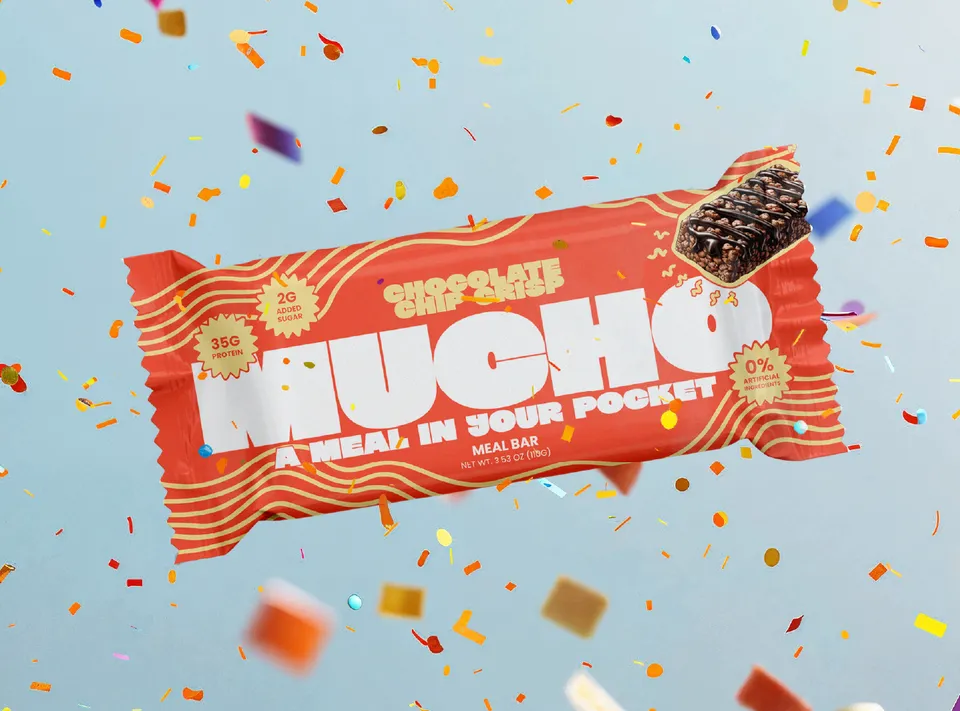
In a crowded set, a pack that lists ingredients competes on price. A pack that owns a category frame — "when a snack isn’t enough and a meal’s too much" — competes on meaning. Your packaging is your highest-traffic ad; most CPG packaging is wasted media.
Paid traffic that never becomes repeat revenue
DTC consumer brands that buy attention without building brand memory rent their customers. Repeat purchase rate is a brand metric before it is a retention metric — if buyers can’t re-find and re-justify you, CAC eats the margin.
Proof from the portfolio
Mucho Brands
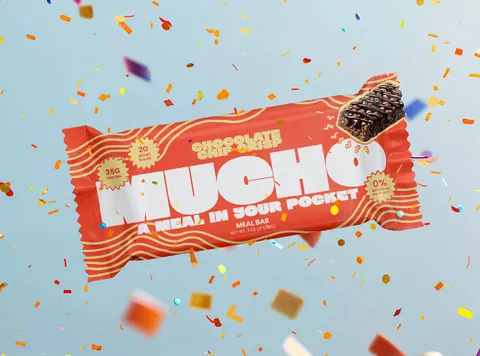
A high-protein "meal in your pocket" built from idea to category leader — positioning, identity, and packaging engineered to win buyer meetings before launch.
Read the case study →Aluxan
An Austin consumer brand whose identity system turned product quality into shelf velocity.
Read the case study →Flavor Fix Foods
A food brand rebuilt around brand memory — so first-time buyers come back without a discount.
Read the case study →How Revenue-Engineered Branding™ applies to CPG
Category definition before design
Research & Discovery maps the set you actually compete in — then defines the frame where you are the only answer, the way Mucho entered the market already looking like the leader.
Positioning that survives the shelf
Messaging pillars are written for the three seconds a shopper or buyer gives you — pack front, end cap, and marketplace tile all carry the same argument.
Identity and packaging as one system
Design Execution builds the visual identity and the packaging architecture together, so every SKU extends the brand instead of fragmenting it.
Launch with tracking, optimize for repeat
Implementation ships with performance tracking from day one; optimization targets the metrics that compound — acceptance rate, velocity, repeat purchase.
Consumer brand questions, answered
Do you work with pre-launch consumer brands?
Yes. Mucho Brands came to the studio as an idea — no positioning, no identity, no packaging — and launched already looking like a category leader, reaching a $1M+ first-year run rate. Pre-launch is often the highest-leverage moment for Revenue-Engineered Branding™, because the category frame gets set before a single SKU prints.
Is this packaging design or brand strategy?
Strategy first, then the system that expresses it. Packaging is executed as part of Design Execution — after research defines the category frame and positioning. A pack designed without that foundation is decoration; a pack designed from it is a salesman printed at scale.
What does a consumer-brand engagement cost?
The Brand Clarity Audit is $749 (5–7 days) and identifies exactly where the brand is creating friction. Full builds run from the $6,000 Brand Identity Accelerator to the $15,000 Brand Growth System; category-defining launches use Revenue-Engineered Category Leadership™ from $22,000.
How long until we are launch-ready?
Identity and packaging foundations take 3–4 weeks; the full Brand Growth System — strategy, identity, packaging, conversion-ready site, and launch support — runs 8–10 weeks. The studio takes one engagement at a time, so timelines hold.
Not sure where your brand is leaking revenue?
Start with the Brand Clarity Audit — $749, 5–7 days, a focused diagnostic of exactly what to fix first.
Also serving real estate brands and professional services firms · all case studies